
Residential Electrical
Residential Electrical Services
Panel upgrades, EV chargers, surge protection, repairs and remodel wiring — done by the same licensed crew that installs our generators, across the same service area.
- Texas Electrical Contractor TECL #37583
- 16 years of electrical experience
- Self-performed — never brokered to another company
- Small jobs welcome, not just big ones
The electricians behind the generators
Most people find us because of standby generators. What is easy to miss is that a generator installation is residential electrical work — the panel, the transfer switch, the load calculation, the branch circuits, the permit and the inspection. The electrician who does that on your generator job is the same one who will upgrade your service, run your EV charger or track down the circuit that keeps tripping.
It all runs under one license, TECL #37583, and we self-perform it. There is no subcontractor in the middle who you never met and cannot call back.
What we do
- Panel and service upgrades
- Replacing an undersized or obsolete panel, and taking a service from 100 A to 200 A where the load calculation calls for it. Includes meter and main coordination with CenterPoint and the permit.
- Whole-home surge protection
- Panel-mounted protection against the surges that come in off the utility during storms and switching events — the ones that take out HVAC boards and appliance electronics.
- EV charger installation
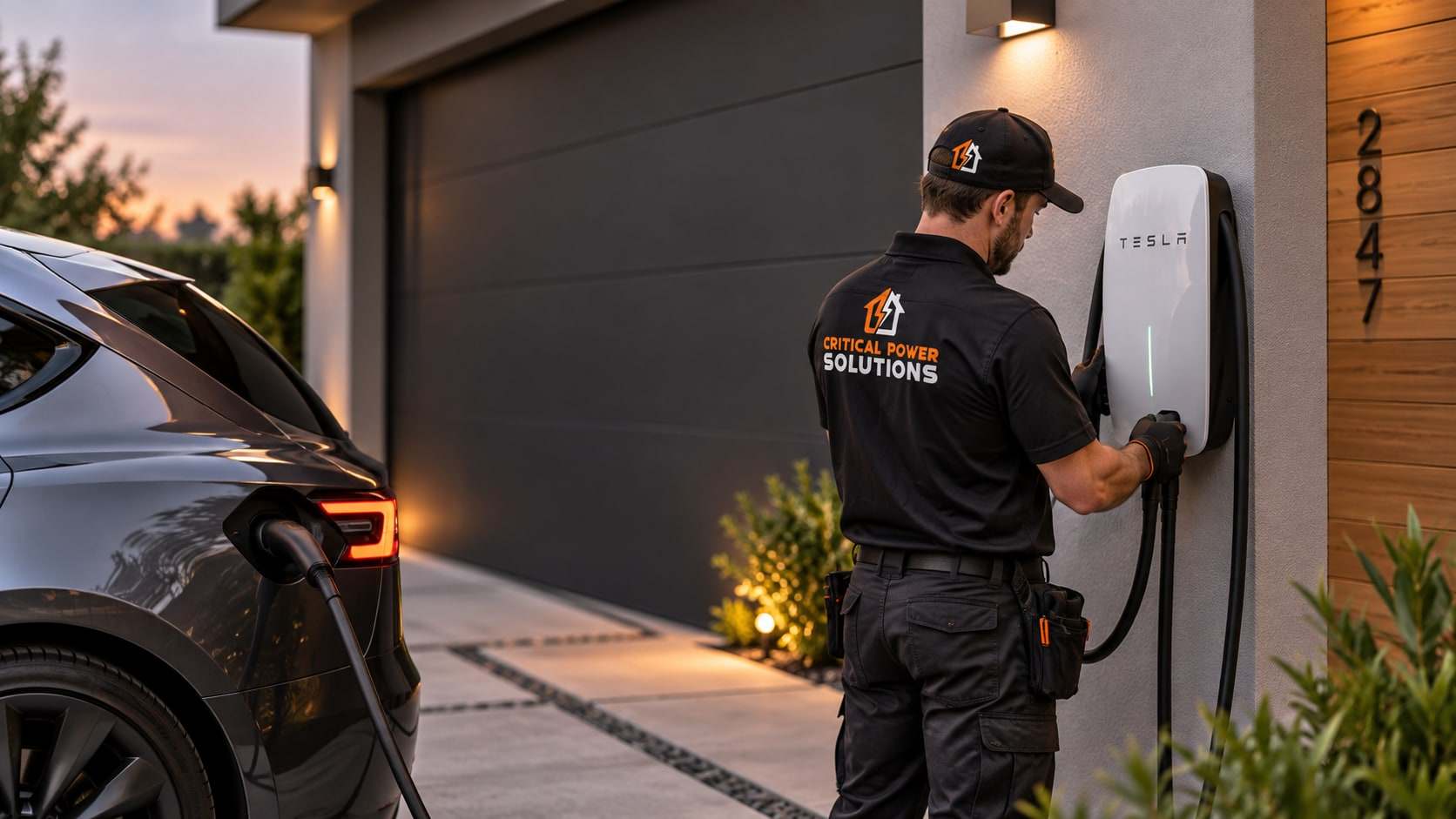
- Level 2 chargers, including the circuit, the run to the garage and an honest answer about whether your existing service can carry a continuous 40–48 A load.
- Troubleshooting and repair
- Breakers that trip, circuits that are dead, outlets and switches that have failed, flickering lights. We find the cause rather than replacing parts until it stops.
- Remodels, additions and new construction
- Rough-in and trim for a renovation, an addition or a custom home — coordinated around the rest of the trades and through inspection.
- Lighting, fans and fixtures
- Recessed lighting, under-cabinet, exterior and security lighting, ceiling fans, and fixture replacement including the ones nobody wants to reach.
- Dedicated circuits
- Hot tubs, pools and pool equipment, well pumps, workshops, garage freezers, window units — anything that needs a circuit of its own, sized properly.
- Aluminum wiring and knob-and-tube
- Remediation of branch-circuit aluminum and replacement of knob-and-tube in older housing stock, which is also what insurers tend to ask about.
- Generator-adjacent electrical
- Sub-panels, smart load management modules and transfer switch retrofits — including on generators somebody else installed.
If it is residential electrical and it is not on this list, ask anyway — the list is what comes up most, not a limit.
Thinking about a generator later? Tell us now, even if it is years away. A panel or service upgrade done with a future standby system in mind costs the same today and saves doing part of the work twice. It is the single most common thing we wish homeowners had mentioned earlier.
When a panel upgrade is actually the answer
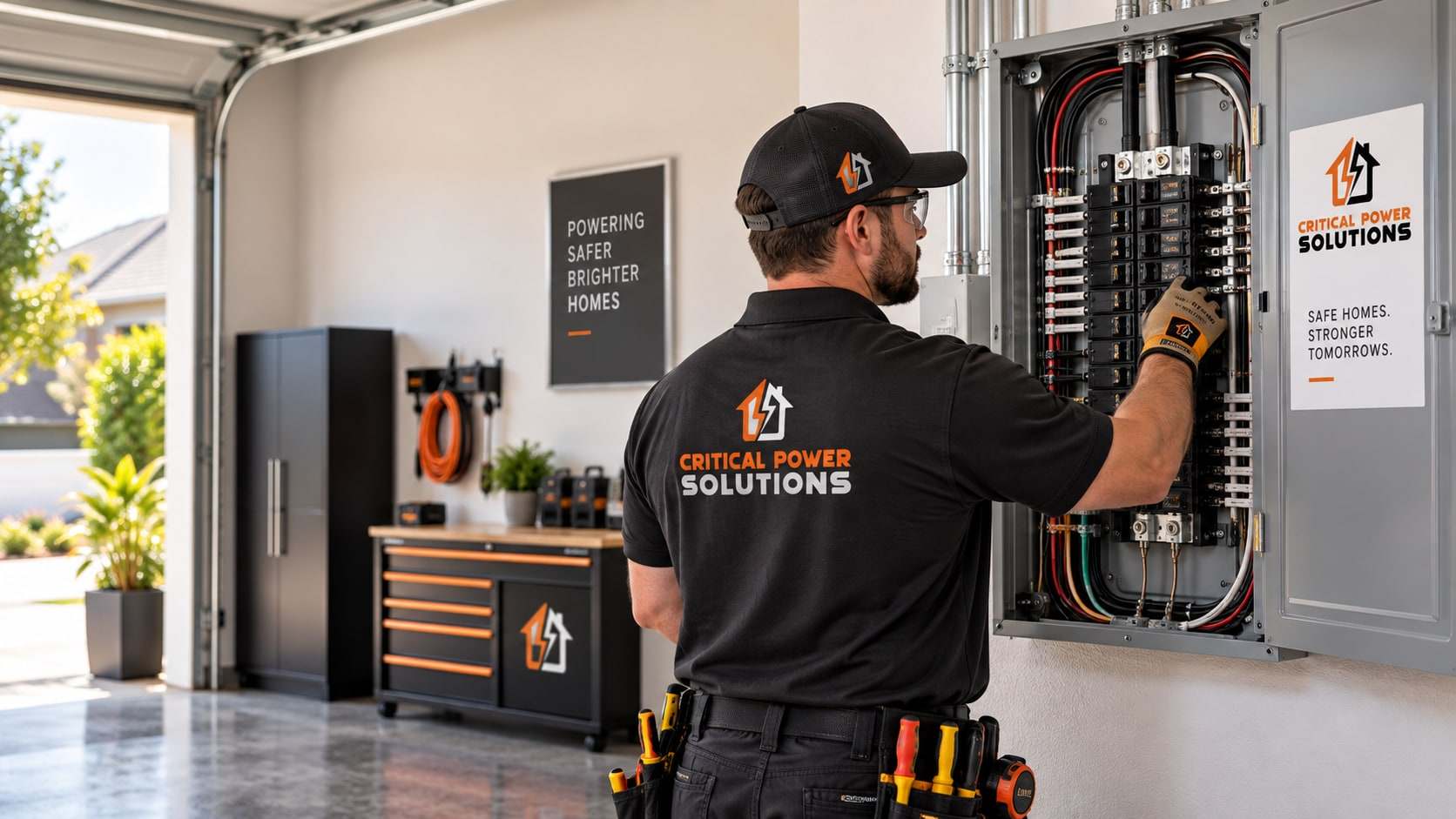
Not every problem is the panel, and we will tell you when it is not. But the service is genuinely the bottleneck when the panel is full and there is nowhere to land a new breaker, when breakers trip as soon as two normal loads run together, when a house on a 100 A service has since gained a second HVAC unit or an EV, or when the panel is from a manufacturer that is no longer considered safe to add to.
Adding an EV charger, a pool heater or a generator is the usual trigger, because each one changes the calculated load on the service. We run that calculation before we quote, so the answer comes out of arithmetic rather than a guess — the same NEC dwelling-unit calculation behind our sizing calculator, which you are welcome to run yourself.
Permits and inspection
Panel and service work, new circuits and most remodel wiring need a permit and an inspection from whichever authority covers your address — which in Fort Bend County may be the county or your city depending on where you sit. We pull it and meet the inspector. An electrician who offers to skip the permit is offering you a problem that surfaces when you sell the house.
Where we work
The same 96 communities as our generator work, across Fort Bend, Harris, Brazoria, Galveston, Waller, Austin, Wharton and Coloradocounties, out of Richmond. If you are inside about an hour of us, we are there. See the fullservice area list, or just call and ask.
Getting us out
Call (346) 420-5744 or send the quote form with a description and a photo of your panel if the job involves one — that one photo answers most of what we would otherwise have to ask on the phone. For anything that is not an emergency we will give you a written number before we start.
Common questions
Do you do regular electrical work, or only generators?
Can you install a Level 2 EV charger?
How do I know if I need a panel or service upgrade?
Will you come out for a small job?
Is whole-home surge protection worth it?
Get a straight answer on what it costs
Tell us about your home or building and we'll come out, size it properly and put a written number in front of you. No charge for the visit.
TECL #37583 · Kohler Certified · Generac Authorized Dealer ·BBB Accredited Business · Veteran & family owned